




A scarf can be a wonderfully personal gift without requiring you to guess someone’s clothing size. The best starting point isn’t a favorite color, though. It’s how the recipient likes to dress, when they’ll wear it, and which fibers they enjoy against their skin.
EcofiedHome’s scarf collection includes pure fibers as well as blends. This guide explains the choices and links to examples, so you can choose a gift with the material, proportions, and styling possibilities in mind.
Cashmere: for someone who loves a soft winter layer
Our Himalayan cashmere scarves include both handloomed designs and ribbed knits made in Nepal. Choose a broad scarf for someone who likes to drape fabric across their shoulders, or a narrower knit for someone who prefers a scarf tucked beneath a coat.
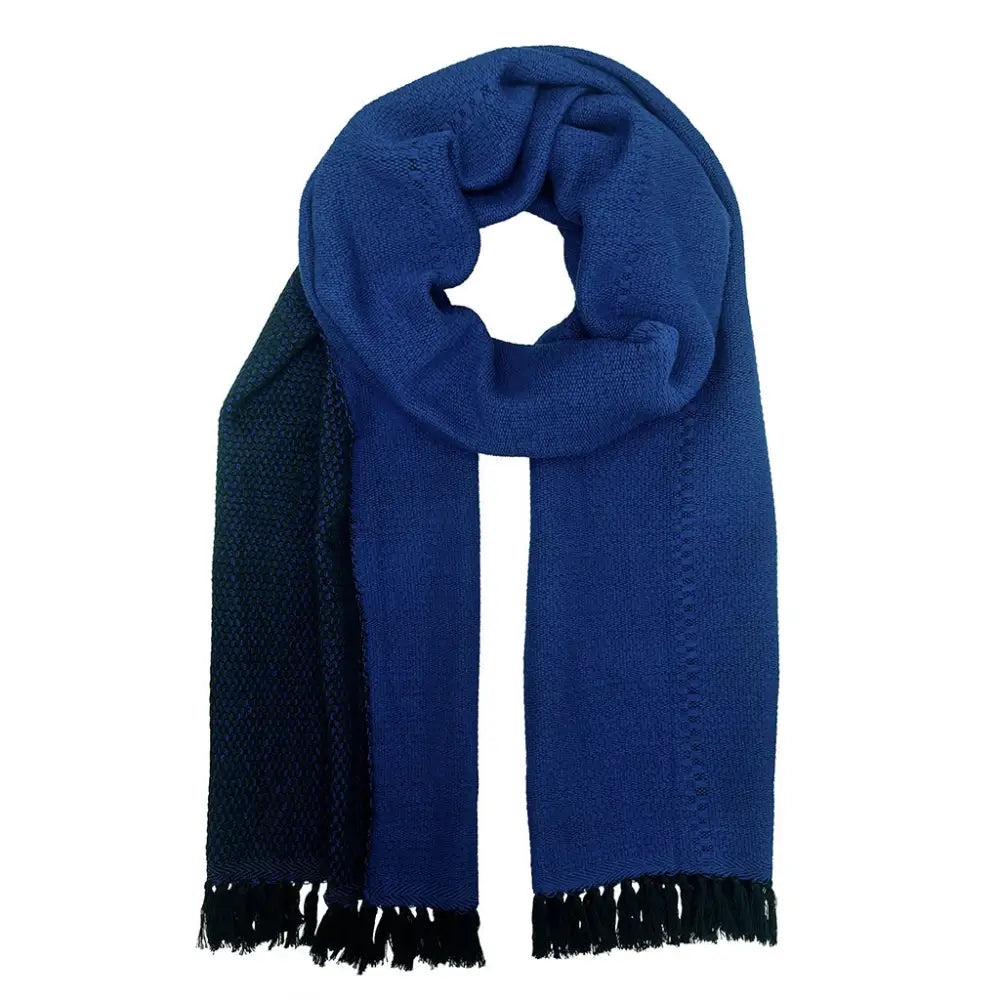
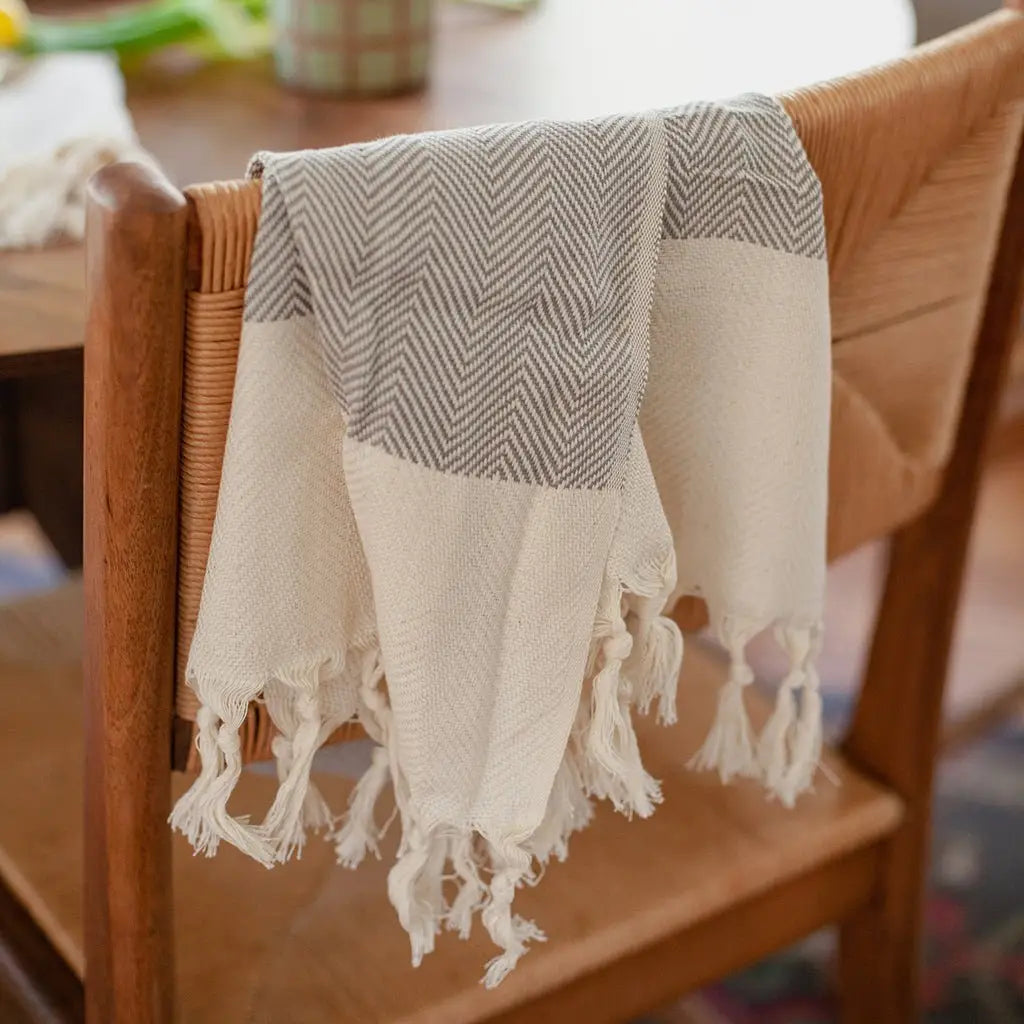
The Berry Handloom Cashmere Scarf is made from 100% Himalayan cashmere and measures 79 by 26 inches. At this size, it can be used as a wrap or scarf. For a more restrained color and patterned weave, consider the Charcoal Herringbone Cashmere Scarf. The Slate Blue Ribbed Himalayan Cashmere Scarf offers a narrower 69-by-10-inch shape.
When to wear them: A natural choice for fall and winter layering. A broad cashmere wrap can also be useful on a chilly spring evening, depending on the climate and the wearer’s preference for warmth.
Pure alpaca and baby alpaca: choose the texture and coverage
For someone who enjoys a soft scarf with a distinctive texture, look beyond the fiber name to the construction. A chunky knit creates a different look from a light, broad loop-knit wrap. These pure-fiber options contain no polyamide or merino wool, unlike the blends below.
The Chunky Gray Knit Alpaca Scarf is 100% alpaca and measures 79 by 14 inches. Its long, relatively narrow shape can hang open or loop around the neck, making it a good starting point for someone who likes the look of a substantial knit without a wide shoulder wrap.
The Gray Loop Knit Baby Alpaca Scarf is 100% baby alpaca and measures 77 by 24 inches, plus fringe. Its softly looped surface and extra width make it worth choosing for someone who likes texture and the option to wear their scarf across the shoulders.
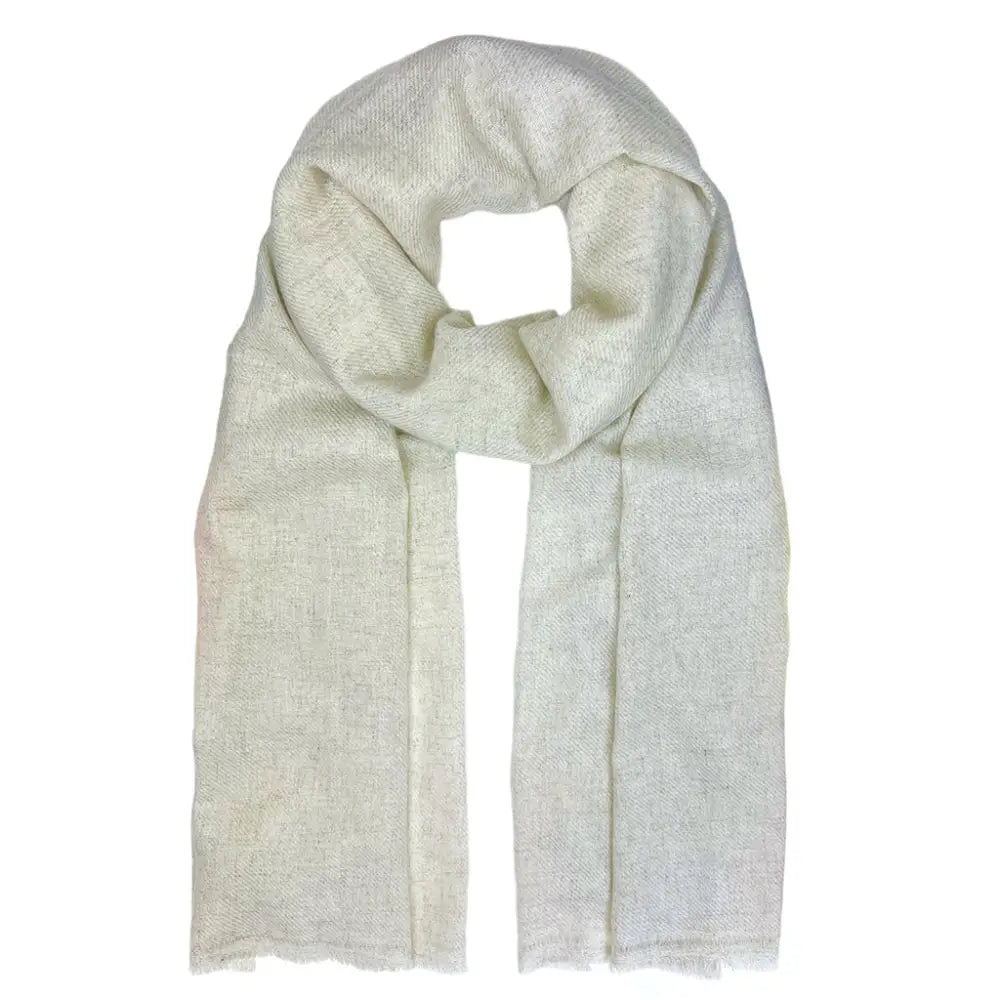
For a simpler outline, the Andes Snow Baby Alpaca Scarf with Gray Edge is 100% baby alpaca and measures 72 by 16 inches, plus fringe. Its snow-white color and contrasting gray border offer detail without a chunky knit silhouette.
When to wear them: Start with these for fall and winter gifts. The chunky knit suits a cold-weather wardrobe, while the lighter loop-knit and Andes designs can also serve as layers on cool spring days. None should be chosen as wind protection based on fiber alone; the knit’s openness and how it is worn matter too.
Alpaca blends: plush coverage or an open-knit layer
Alpaca blends offer different textures and proportions, not just a different fiber percentage. Compare how much fabric the recipient likes around the neck, whether they want a wrap, and whether they prefer a plush surface or a visibly open knit.
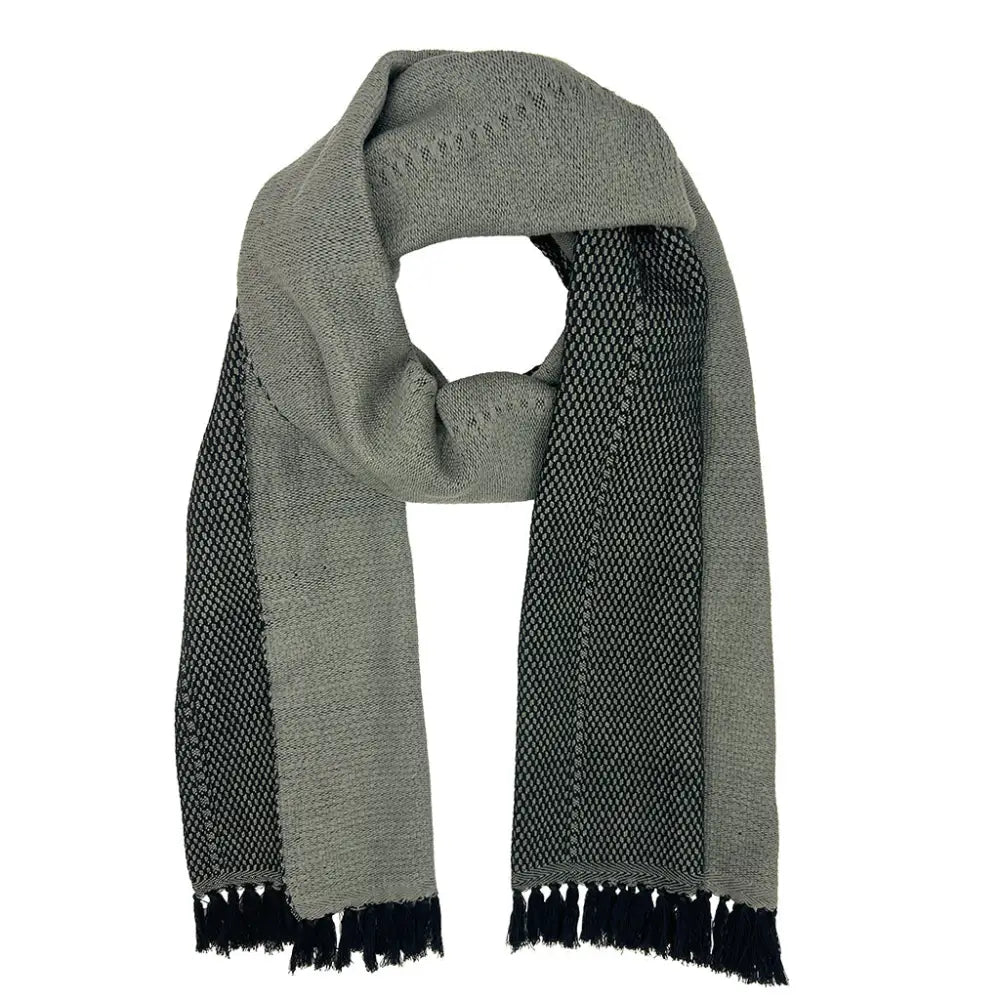
The Charcoal Ultra Plush Alpaca Blend Scarf contains 89% alpaca and 11% polyamide. At 80 by 24 inches, it offers plenty of length for wrapping and enough width to drape over the shoulders. Its plush finish and dark neutral color make it a useful option for someone who likes a generous layer alongside a tailored coat.
The Moss Green Highland Alpaca Scarf contains 89% alpaca and 11% recycled polyamide. It measures 63 by 24 inches, so it is shorter than the Charcoal scarf while retaining a broad shape. Its wide, open knit is the key design difference: choose it for relaxed folds and visible texture rather than assuming the same alpaca percentage means the same fabric.
When to wear them: The plush Charcoal scarf is a strong fall-and-winter choice. The open-knit Highland design is worth considering for fall or cool spring layering, as well as winter outfits worn with a coat. An open knit allows more airflow than a closely constructed fabric, so it is not the first choice if blocking a cold wind is the priority.
Choose by finish and size as well as composition; fiber percentages alone do not establish which scarf will feel warmer.
Alpaca and merino wool blends: generous knits with different finishes
These scarves combine baby alpaca, merino wool, and recycled polyamide. Both linked styles measure 79 by 26 inches, giving the recipient the choice of a neck scarf or a broad shoulder wrap. The practical distinction is their construction and appearance, not their size.
The Ice Blue Alpaca Merino Blend Knit Scarf contains 65% baby alpaca, 30% merino wool, and 5% recycled polyamide. Its airy, open knit falls in light, unstructured folds. Consider it for someone who likes a soft layer across the shoulders and a pale color against darker clothing.
The Coal Gray Alpaca Merino Blend Knit Scarf contains 60% baby alpaca, 5% merino wool, and 35% recycled polyamide. Its subtle knit texture and finished edge offer a quieter look in a dark neutral, useful for someone who prefers understated accessories.
When to wear them: Both are options for fall and winter layering and cool spring evenings. The airy Ice Blue design is particularly worth considering as a shoulder layer rather than a barrier against wind. Choose around the recipient’s climate and styling habits; the different merino percentages are not a warmth rating.
If the recipient avoids sheep wool against their skin, remember that both contain merino wool and choose a known favorite fiber instead.
Sheep wool: for someone who enjoys a wool scarf
If wool is already a favorite in the recipient’s wardrobe, start with a color and design that complements their coat. If they avoid wool against their neck, choose a fiber you know they prefer rather than guessing.
The Gray Marled Dot Sheep Wool Scarf is handwoven in Nepal from 100% sheep wool and measures 72 by 23 inches. Its marled gray surface, small dots, and eyelash fringe add detail to a plain coat, while its broad shape offers more coverage than a narrow neckline scarf.
When to wear it: Think primarily of fall and winter, with an extra layer on colder spring days if the wearer enjoys wool.
Silk: for someone who likes a light finishing layer
A silk scarf is worth considering when the gift is more about drape and a finishing touch than a chunky winter knit. Our Khmer silk designs are traditionally handloomed in Cambodia.
The Khmer Silk Tie-Dye Scarf in Fog or Wine brings pattern to a light finishing layer. Made from 100% Khmer silk, it measures 66 by 33 inches, giving it enough width to wear across the shoulders as well as gathered at the neck.
When to wear it: Consider silk for spring and fall styling or as a light shoulder covering on a cooler summer evening. It can also finish a winter outfit indoors, rather than replace a substantial outdoor winter scarf.
Cotton and organic cotton: choose by size and how it will be worn
All three scarves below are 100% cotton; the Stupa Pattern design uses organic cotton. Their dimensions make a useful starting point for choosing between a relatively narrow neck scarf and a broader shoulder wrap.
The Earthy Striped Cotton Scarf, handwoven in Ethiopia, measures 73 by 16 inches. The long, narrow proportions suit a loose drape or neck loop without the width of a wrap.
The Handloomed Organic Cotton Stupa Pattern Scarf, made in Cambodia from 100% organic cotton, measures 72 by 31 inches, plus hand-knotted fringe. Its stupa-inspired pattern and Black or Charcoal color options give it a different character from a plain wrap. The broad shape suits someone who wants shoulder coverage as well as the option to gather the fabric at the neck.
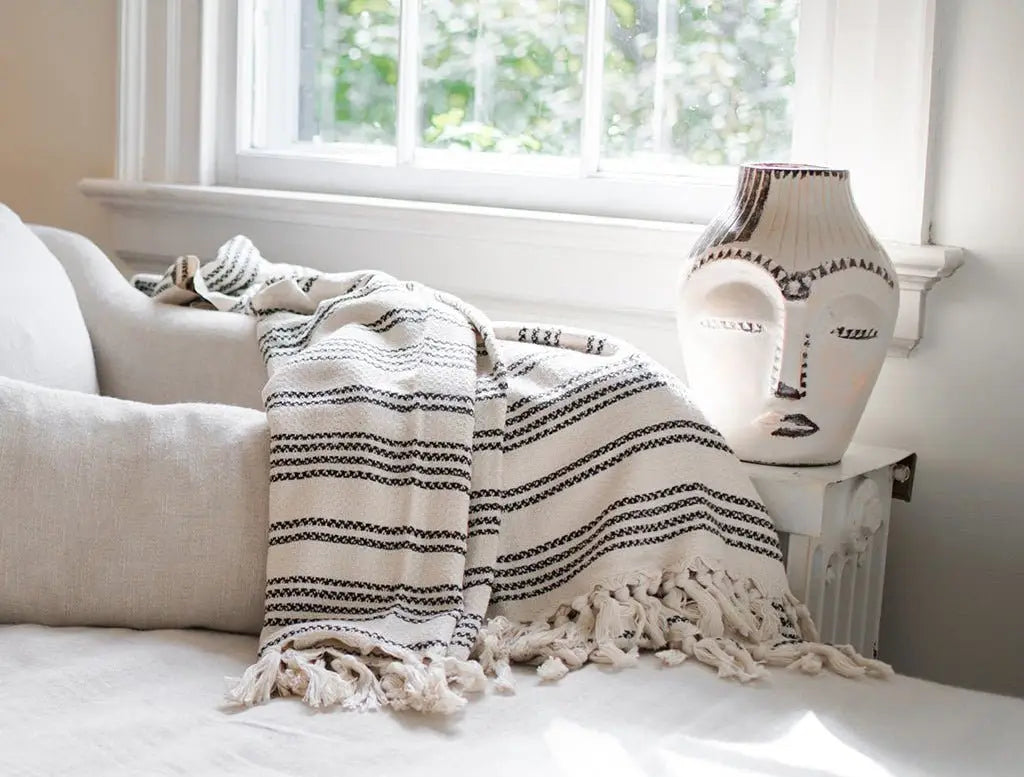
The Classic Ethiopian Cotton Wrap Scarf is handloomed in Ethiopia from 100% cotton and measures 80 by 26 inches. Its long, broad proportions and eyelash fringe make it worth considering for someone who enjoys a generous shoulder drape or a long neck scarf. The scarf is available in Pine, Lava, Navy, and Gold, and is dyed using low-impact, AZO-free, REACH-certified reactive dyes.
When to wear them: Consider these cotton scarves for spring and fall, or as shoulder layers in cool indoor spaces. They are lighter-layer choices rather than substitutes for a substantial winter knit. The Earthy Striped design offers a narrower neck scarf, while the Stupa Pattern and Classic Ethiopian designs provide more width for shoulder coverage.
Linen and linen-cotton: compare pure fiber with a blend
For a recipient who already loves linen clothing and woven wraps, look at both the pure linen and linen-cotton options.
The Two Tone Gauze Linen Scarf, handwoven in Ethiopia, is 100% linen. The Handloom Linen Cotton Blend Wrap Scarf combines 50% linen and 50% cotton in a 70-by-28-inch wrap handloomed in India. Available in Denim or Black, the blend offers a broad shape that can drape across the shoulders or gather at the neck.
When to wear them: Consider these for spring and summer styling, a light covering in cool indoor spaces, or early-fall layering. They are options for someone seeking a woven wrap rather than a plush winter scarf.
Bamboo: a handloomed wrap option
The Handloom Bamboo Wrap Scarf is 100% bamboo and is made in India. It’s another option to compare for someone who enjoys wrap-style scarves.
When to wear it: Its lightweight feel and 72-by-28-inch shape make it worth considering for spring and fall, cooler summer evenings, or an indoor shoulder layer during winter.
Milk yarn: for someone curious about unusual textiles
The Bold Stripe Milk Yarn Scarf is listed as 100% milk yarn, measures 72 by 26 inches, and is handmade in India. It offers a different textile to explore for someone who enjoys discovering less familiar materials.
When to wear it: Consider this soft, smooth woven scarf as a finishing layer for spring or fall outfits and cool indoor settings. If outdoor winter warmth is the main goal, start instead with the more substantial knit options above.
Before you choose: three details that matter
Personal preference: Start with fibers the recipient already enjoys. No material is guaranteed to feel comfortable to everyone.
Dimensions: A narrow scarf and a broad wrap serve different styling preferences. Compare measurements rather than relying on photographs alone.
Care: Check the specific product instructions. Don’t assume every scarf made from a similar fiber can be washed the same way.
Seasonal suggestions are starting points, not temperature ratings. Climate, knit or weave density, layering, and personal comfort all affect when a scarf feels right.
Choose the scarf that fits the person’s habits as well as their style, whether that means a richly colored cashmere layer, a textured alpaca knit, or a woven silk, cotton, or linen wrap.